A grid of your repository's contributors — every contributor's avatar, rendered as one portable image for your README. Like contrib.rocks, but shadcn-styled.
The contributors image renders a grid of a repository's top contributors — their avatars, linked to their GitHub profiles — as a single portable SVG (or PNG) served from shieldcn. It's a contrib.rocks-style image, but built from shadcn-styled chrome and the same background system as headers and sponsors. Everything is encoded in the image URL, so it works anywhere a Markdown image does and never needs a build step or a CI job.
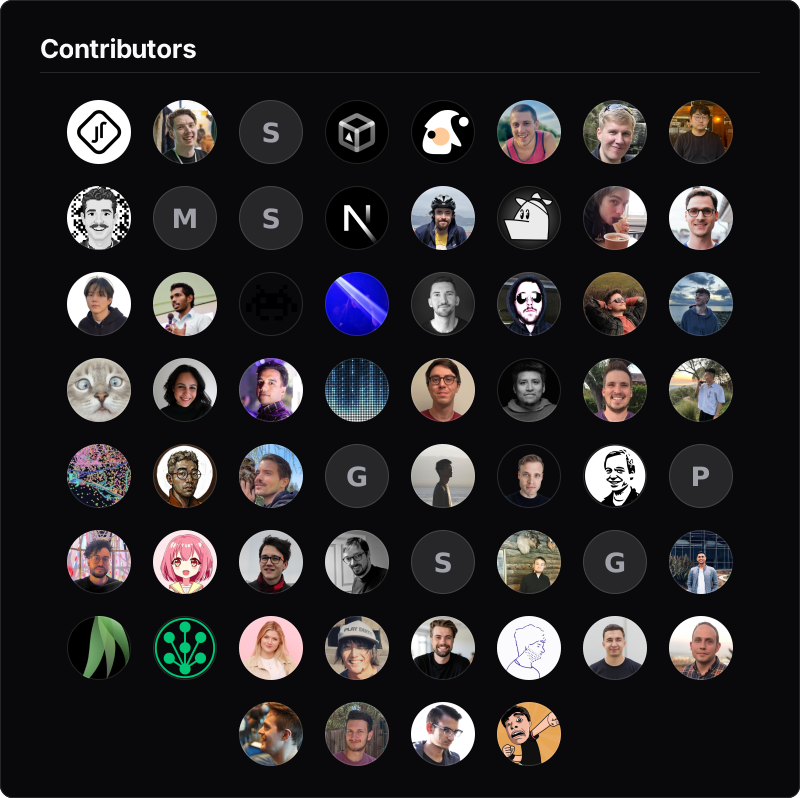The fastest way to make a contributors image is the interactive generator. Enter an owner and repo, pick a background, theme, and size, then copy the Markdown.
Open the contributors generator
/contributors/{owner}/{repo}.svg     SVG grid
/contributors/{owner}/{repo}.png     PNG grid
/contributors/{owner}/{repo}.json    resolved contributor list (JSON)
{owner}/{repo} is any public GitHub repository. Drop it into your README with
a linked Markdown image:
[](https://github.com/vercel/next.js/graphs/contributors)Or center it with an HTML block:
<p align="center">
  <a href="https://github.com/vercel/next.js/graphs/contributors">
    <img src="https://shieldcn.dev/contributors/vercel/next.js.svg" alt="Contributors" />
  </a>
</p>Contributors are ordered by number of contributions (commits), descending —
the same order as GitHub's contributors graph. Bots (accounts ending in
[bot], or of GitHub type Bot) are excluded by default; include them with
?bots=true.
limit — cap how many avatars are shown (1–100, default 60).min — only include contributors with at least this many contributions.bots — set true to include bot accounts.[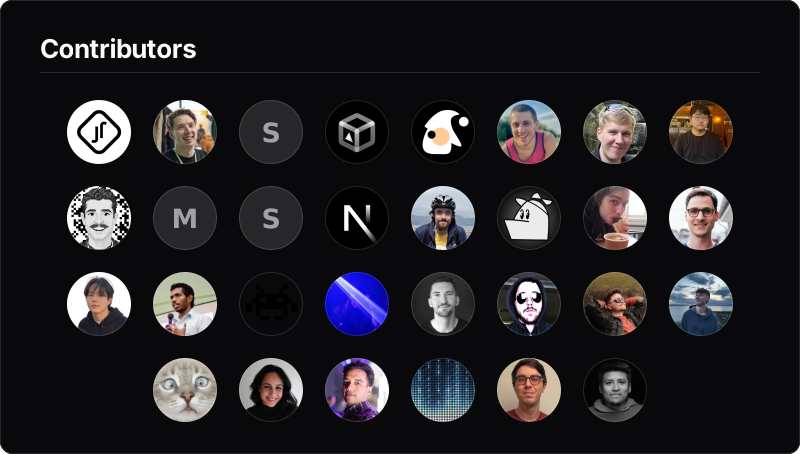](https://github.com/vercel/next.js/graphs/contributors)limit=24, names=true
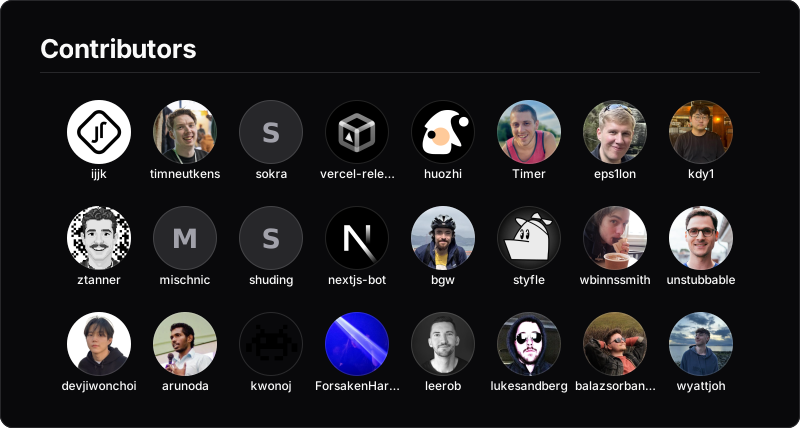The size parameter sets the avatar diameter; use width to set the canvas
width — avatars wrap into as many rows as needed. Names are off by default
for a dense avatar grid; turn them on with names=true.
| Parameter | Values | Default |
|---|---|---|
size | 24–140 (px) | 64 |
width | 320–2000 (px) | 800 |
limit | 1–100 | 60 |
min | ≥ 0 | 0 |
names | true, false | false |
bots | true, false | false |
titleAlign | left, center, right | left |
align | left, center, right (avatars) | center |
radius | 0–80 (px) | 12 |
border | true, false | true |
watermark | true, false | false |
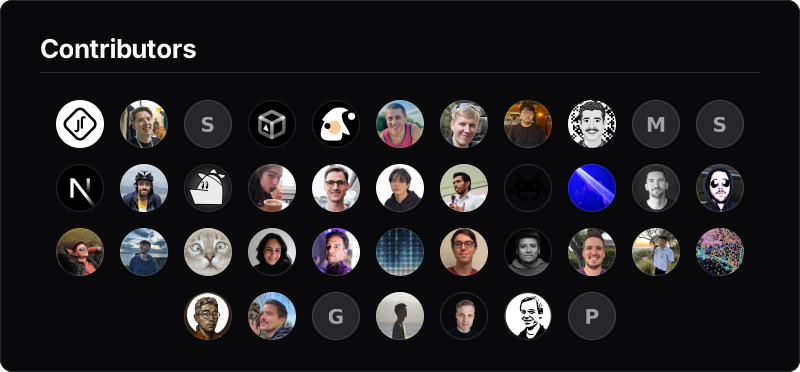The grid has a "Contributors" heading by default. Override it with title=...,
or hide it with title=false. Color controls:
bg — a solid background color (hex without #), or transparent to blend
into the page.accent — the color of the hairline rule under the title (hex without #).The card uses the same premade background system as headers —
so it's just as customizable. Set a preset with ?preset=:
| Preset | Description |
|---|---|
surface | Clean flat zinc surface. The default. |
gradient | Subtle neutral vertical gradient. |
dots | Dot grid over the surface. |
grid | Line grid over the surface. |
graph | Fine and coarse graph paper. |
glow | Soft themed spotlight from the top. |
transparent | No surface fill — blends into the page. |
glow preset, blue theme
For full control, override the background directly:
theme — tints the glow/accent: zinc, slate, blue, green, rose,
orange, violet, purple, cyan, emerald.gradient — comma-separated hex stops with an optional trailing angle, e.g.
gradient=7c2d12,9f1239,86198f,135.pattern — dots, grid, graph, or none.glow — the spotlight color (hex without #).bg — a solid color (hex without #), or transparent.image — a background photo (Unsplash or any image URL), inlined behind an
auto scrim; tune it with overlay (0–1) and tint.The grid reads correctly in both modes. Pass mode=light or mode=dark, or
pair two images in a <picture> element so it follows the reader's GitHub
theme. See Light & Dark Mode.
In addition to the shared mode and font parameters from the
API reference:
| Parameter | Values | Default |
|---|---|---|
title | string, or false | Contributors |
limit | 1–100 | 60 |
min | ≥ 0 | 0 |
names | true, false | false |
bots | true, false | false |
titleAlign | left, center, right | left |
align | left, center, right (avatars) | center |
size | 24–140 (px) | 64 |
width | 320–2000 (px) | 800 |
preset | surface, gradient, dots, grid, graph, glow, transparent | surface |
theme | zinc, slate, blue, green, rose, orange, violet, purple, cyan, emerald | — |
bg | hex without #, or transparent | card surface |
gradient | comma-separated hex stops, optional trailing angle | — |
pattern | dots, grid, graph, none | preset |
glow | hex without # | per preset |
image | Unsplash / image URL, or data: URI | — |
overlay | 0–1 | 0.45 |
tint | hex without # | 000000 |
accent | hex without # | — |
radius | 0–80 (px) | 12 |
border | true, false | true |
watermark | true, false | false |
mode | dark, light | dark |
Contributor data comes from the GitHub REST
contributors API
(/repos/{owner}/{repo}/contributors), ordered by contributions descending.
Avatars are fetched once and inlined into the image, and the list is cached for
an hour (serving the last-known-good list during any GitHub outage). The image
renders the top contributors up to limit; very large repositories are capped
at 100. A repository that doesn't exist or has no contributors renders an
empty-state message.